Traveling with medications: TSA screening and customs
How to pack, declare and document prescription medications for TSA screening, and where to check destination and customs rules before an international trip.

Medication is the one item most travelers cannot replace on short notice. Getting it through airport security is usually straightforward, and the TSA publishes specific rules for it. Crossing a border is a separate question, and the answer depends on the country, the drug and the amount.
This guide is for US travelers flying from US airports. It is general planning information, not medical, legal or customs advice. Talk to your prescriber or pharmacist about what you need to carry, and confirm any destination’s rules with that country’s official sources.
Step 1: Decide what goes in the carry-on
Keep everything you cannot do without in your carry-on bag, not your checked bag. The TSA page on medical items lists inhalers, EpiPens, blood sugar test kits and most other medical supplies as allowed in both carry-on and checked baggage (TSA, medical items, checked November 18, 2026). Allowed in both does not mean equally safe in both. A checked bag can be delayed or lost, and a missed dose is harder to fix than a missing shirt. Our guide to a bag that does not arrive is a reminder of why essentials travel with you.
Take enough for the whole trip plus a margin for delays, and ask your prescriber how much margin makes sense for your medication. Some pharmacies and insurers limit early refills, so ask well before departure.
Step 2: Label it and keep it in the original container
Pills and other solids must go through screening, and the TSA says clear labeling helps that process (TSA, disabilities and medical conditions, checked November 18, 2026). On its medical items page the TSA says it recommends, but does not require, labeled medications (TSA, medical items, checked November 18, 2026).
For domestic security alone, labeling is optional. For international travel it is worth treating as essential. The CDC advises travelers to bring prescriptions, preferably in their original bottle, and to carry copies of prescriptions (CDC, Pack Smart, checked November 18, 2026). A pharmacy label with your name, the drug name and the prescriber is the simplest proof that the medicine is yours.
Avoid decanting pills into a weekly organizer for the border-crossing leg of a trip unless you also carry the original labeled containers. Use the organizer once you arrive.
Step 3: Pack liquid medication separately
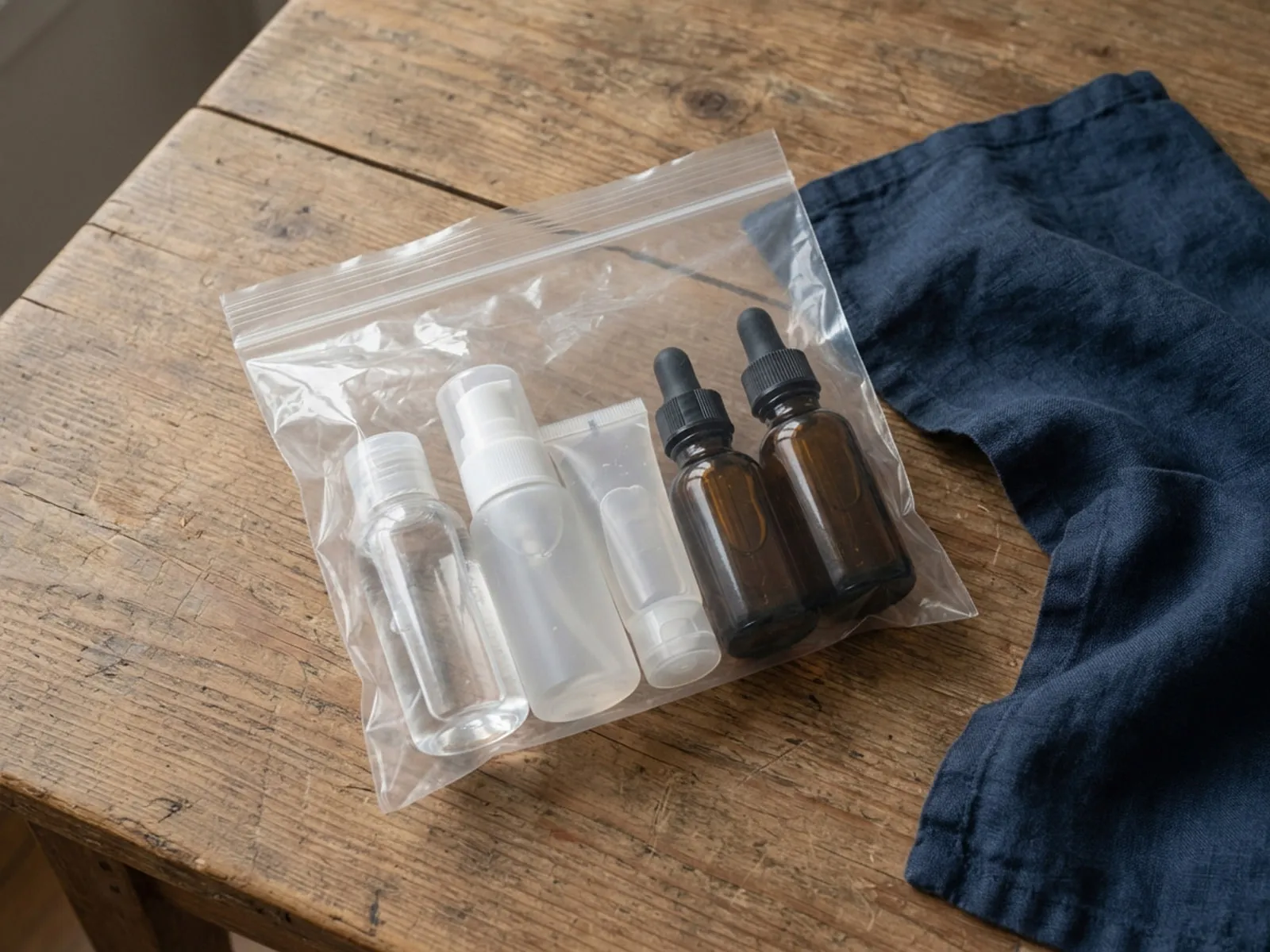
The standard TSA liquids rule allows a quart-sized bag of containers of 3.4 ounces (100 milliliters) or less in a carry-on. Medications are one of the listed exemptions (TSA, liquids, aerosols and gels rule, checked November 18, 2026).
The TSA allows larger amounts of medically necessary liquids, gels and aerosols in reasonable quantities for your trip, but you must declare them to officers at the checkpoint for inspection. It asks you to remove them from your carry-on and place them in a separate bin, along with accessories such as freezer packs, IV bags, pumps and syringes (TSA, disabilities and medical conditions, checked November 18, 2026).
Two details are easy to miss. First, ice packs, freezer packs and gel packs may be presented frozen, partially frozen or melted to keep medically necessary items cool. Second, a liquid that alarms during screening needs additional screening, and the TSA says that if the alarm cannot be resolved the item may not be allowed. The TSA’s contact lens solution entry notes that some solutions contain chemicals that typically alarm, and recommends putting solution over 3.4 ounces in checked baggage (TSA, medical items, checked November 18, 2026). For a medically necessary item you cannot replace, ask your pharmacist or the manufacturer about travel, and consider carrying a smaller quantity.
Eye drops follow a different line on that page: it lists them as allowed in a carry-on at 3.4 ounces (100 milliliters) or less.
Step 4: Tell the officer before screening starts
Before screening begins, tell the TSA officer that you have medically necessary liquids or medications. Do not wait for the bag to be pulled aside. The TSA says it may inspect or test liquids, and that you may notify officers verbally, with a TSA Notification Card or with medical documentation (TSA, disabilities and medical conditions, checked November 18, 2026).
Devices attached to your body, such as an insulin pump, have their own guidance. The TSA says insulin pumps and supplies must be accompanied by insulin, and that insulin in any form or dispenser must be clearly identified. For pumps, sensors and other external devices, tell the officer where the device is before screening begins and ask the manufacturer whether the device may go through X-ray or body-scanner screening (TSA, medical items, checked November 18, 2026).
The TSA also states that the final decision on any item rests with the officer at the checkpoint. A calm explanation and clear labeling make that conversation shorter.
Step 5: Check the destination’s rules before you pack
This is the step that screening rules do not cover. The CDC warns that some countries restrict which medications travelers may bring, and tells travelers to check with the US embassy for the country they are visiting. It also points to the State Department’s tips for traveling abroad for customs and import restrictions (CDC, Pack Smart, checked November 18, 2026).
Rules can differ for controlled substances, strong painkillers, stimulants, sleep medicines and some medicines that are sold over the counter in the US. Quantity limits and paperwork requirements also vary. Search the destination government’s own customs or health pages, and read the US embassy’s travel information for that country. If you cannot find a clear answer, ask the destination country’s embassy or consulate in the United States, and ask your prescriber about alternatives where a medicine is restricted.
Do this for every country on the route, including connections. A passenger who clears a connecting airport without leaving the secure area is in a different position from one who enters the country, so ask the airline which applies to your itinerary.
Step 6: Carry documents and a short record
The CDC’s packing list recommends bringing copies of prescriptions, a contact card, your health insurance documents and information for your health care professionals, in print and digital form if possible (CDC, Pack Smart, checked November 18, 2026). A note from your prescriber that names the medicine, the dose and the condition can help where rules require it.
Keep a short medication list in your phone with the generic and brand names, since a brand name from home may not be sold abroad. Store it with the rest of your trip documents, as described in our offline trip folder guide.
Coming home, or visiting the US
CBP’s medication guidance covers both US citizens returning from abroad and foreign nationals temporarily visiting the United States, and says FDA rules apply (plus DEA rules for controlled substances). For US citizens it says to travel only with your own medication prescribed by a licensed physician, and that in most cases it is illegal to import drugs obtained abroad for personal use. The 90-day rule of thumb (bring no more than a 90-day supply, plus a valid English prescription or doctor’s note and the original container) is in CBP’s section for non-US citizens temporarily visiting, not for returning citizens (CBP, prohibited and restricted items, checked November 18, 2026). Buying medicine abroad to bring home is therefore a separate question from carrying your own prescription, so check CBP and FDA guidance before relying on it.
Common questions
Do I need to put medications in a plastic bag? The TSA’s quart-bag rule has an exemption for medications. The TSA asks you to declare medically necessary liquids and present them separately for inspection.
Is there a limit on how much liquid medication I can carry? The TSA’s wording is “reasonable quantities for your trip” and it does not publish a fixed number for medically necessary liquids. Carry what your trip needs and expect inspection.
Do I need a doctor’s note? The TSA does not require one, and recommends but does not require labeling. Some destinations, and CBP for foreign visitors entering the US, point to prescriptions or notes, so check each destination.
Can I bring a controlled medication abroad? Rules vary widely by country. Check the destination’s official requirements and the US embassy’s information before departure.
Sources checked November 18, 2026: TSA medical items, disabilities and medical conditions and liquids, aerosols and gels rule; CBP prohibited and restricted items; CDC Pack Smart. General information only; check the destination’s official rules for your medicine.